Google's LSA Move Just Got Real — and Brown Friday Is Coming
Three things landed on a trade shop’s phone in the last ten days, and they add up to one message: the calls you miss are now the most expensive calls you get.
Last updated 12 November 2026
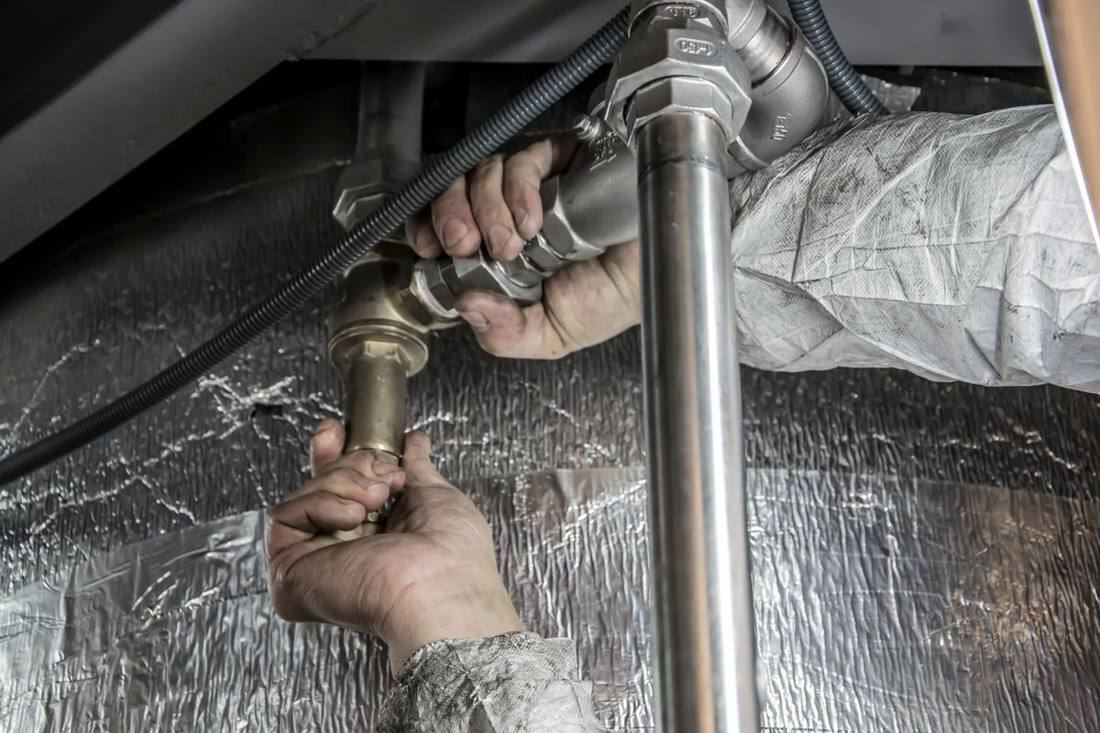
Photo: Anıl Karakaya on Pexels
This post is general information about Google’s policy and trade call data, not legal advice. Check Google’s own pages and a telecoms lawyer before you rely on it.
First, advertisers spotted a brand-new set of pay-per-lead terms inside Google Ads on 9 November 2026 — the clearest sign yet that Google’s Local Services Ads migration is no longer a distant plan. Second, Brown Friday is fifteen days away, and the sewer backups that make it the busiest plumbing day of the year start the night before, on Thanksgiving Eve. Third, fresh call data from 9 November says 74.1% of calls to home-services contractors go completely unanswered — three out of every four potential customers calling someone else.
This post covers what each one actually says, what it means for a plumbing, HVAC, electrical or roofing shop, and the short checklist to work through before the Thanksgiving rush.
1. New pay-per-lead terms spotted in Google Ads on 9 November 2026
On 9 November 2026, PPC News Feed reported that advertisers had found a new agreement inside Google Ads: an option labelled “Ads with pay-per-lead goals terms”. Google has not announced it, and no Google help page describes it yet — so treat it as a spotted change, not a launch. But it is the first time the migration has shown up inside the product itself, and it matters to every home-service business that will shift its Local Services Ads account over the coming months.
The terms reportedly cover three areas:
- Google’s rules for providers — who is allowed to manage the account and under what conditions.
- Consent to watch calls and messages — Google records calls placed in the US and Canada for pay-per-lead goals, and the terms address who consents to that.
- Who is accountable for contested leads and work quality — the part that decides who eats the cost when a lead is disputed.
Read the terms before you accept, and decide inside your own business who owns phone answering, call recording consent and lead disputes. Your account may see this prompt before you expect it, because the migration is phased — and it is picking up pace.
The migration, as it stands today
Google announced in July 2026 that it is retiring the standalone Local Services Ads dashboard and moving every LSA account into Google Ads, where it runs as a specialised Performance Max campaign built around pay-per-lead goals. The phases:
- Phase 1, from August 2026: select US home and storefront service advertisers — plumbing, HVAC, electrical, appliance repair, house cleaning, lawn care, roofing, pest control and moving companies.
- Phase 2, late 2026: broader groups, including service-area businesses without a physical storefront, professional services, and accounts with custom bidding or booking setups.
- Phase 3, 2027: non-US accounts and every remaining category.
Two details from the migration guides matter more than the rest. First, your historical performance reports do not transfer. Past impressions, spend and performance reporting stay behind and become unavailable once your account moves — so save them now, with screenshots if downloadable reports are not available. Second, the account admin gets an email 14 days before the migration date and a reminder 7 days before; Google says to allow up to two weeks after the move for performance to stabilise. A dedicated migration support line exists for LSA advertisers: 1-844-205-0011, Monday to Friday, 9 a.m. to 8 p.m. Eastern.
What changes on the money side
- Weekly budgets become daily averages — the weekly figure divided by 7, with the monthly cap set at the daily average times 30.4.
- Manual maximum cost-per-lead bidding is removed at migration.
- You still pay per valid lead, not per click, and the ads still show on Google Search and Google Maps. A migrated campaign stays keywordless and does not run on YouTube, Display, Discover or Gmail the way a standard Performance Max campaign would.
And the rule that already charges you is still in force: since 1 October 2026, a missed call during your stated business hours can be billed as a valid lead if the caller stays on the line more than 20 seconds — including a call that goes to voicemail or an automated greeting. The median cost per lead for home and home improvement, in LocaliQ’s 2026 benchmarks covering more than 13,000 US campaigns, is $90.92.
The free backup tool that appeared on 10 November
On 10 November 2026, LSArespond launched a free LSA Migration Tool that backs up an account’s LSA data automatically every week, before migration. Once an account is connected, the backup runs on its own — no one has to remember to click export. The tool only reads LSA data; it never changes campaigns, budgets, bids or leads. Two limits to know: backups stop once the account moves to Google Ads, and files already downloaded are yours to keep. It is free for LSArespond customers and non-customers alike.

Photo: RDNE Stock project on Pexels
Further reading: What does a missed call cost? — the maths on a lost call, including the LSA lead fee. Best missed-call text-back software — November 2026 prices for the tools that catch the calls LSA now charges for. Missed-call text-back cost — what the tools actually charge.
2. Thanksgiving Eve sewer backup: the surge starts the night before Brown Friday
Brown Friday — Friday 27 November 2026, the day after Thanksgiving — is the busiest plumbing day of the year. Roto-Rooter’s historical service data puts calls about 50% above an average Friday, with the four-day Thanksgiving weekend running about 21% above other Thursday-to-Sunday stretches. A Dallas master plumber quoted on 10 November 2026 called it “the single busiest day of the year for residential drainage and sewer line issues”, with realtors and plumbers reporting a 20–50% spike in drain-cleaning and sewer-backup requests.
But the surge does not start on Friday morning. It starts on Thanksgiving Eve. Bell Plumbing’s guide on the Thanksgiving Eve sewer backup describes the exact scenario its dispatchers see every November: heavy kitchen use exposes a failing main line, and the house full of guests discovers it the night before the meal. The culprit is FOG — fats, oils and grease — which the EPA blames for roughly 47% of all sewer blockages nationwide. Thanksgiving Eve meal prep pushes FOG down kitchen sinks to its annual peak, and lines that were already half blocked with roots give up under the load.
The call pattern through the weekend is predictable, and worth planning around:
- Thanksgiving Eve night: the main line fails under heavy kitchen use; the caller is panicking, not shopping.
- Brown Friday before 9 a.m.: the first calls cluster in a tight window, almost all of them opening with the kitchen sink — clogs and jammed garbage disposals first.
- Later in the day: the sewer calls arrive, after the second round of showers and the first loads of laundry. A main sewer clog with sewage backing up inside the house is the true emergency and the biggest ticket. It goes first.
- The rest of the weekend: toilet clogs and the jobs that could not get a slot on Friday.
The sting, as ever, is the timing. The rush lands on a holiday Friday when many independent shops are closed or running a skeleton crew. Some shops are already using the week to get ahead of it: a Piscataway, New Jersey plumber is offering 15% off service for customers who mention its Thanksgiving offer, booked through 30 November, on the logic that “a lot of the Thanksgiving calls we get are lines that were already half blocked with roots”. In Atlanta, a local guide calls late November “the ultimate stress test” for a plumbing system and names aging water heaters and kitchen drains as the most susceptible parts.
What to set up before the 27th
- Write the Thanksgiving Eve text now. It should name the business, say when you will call back, and ask the one question that sorts the job: is water running where it should not be, or sewage coming up — or is it a slow drain that can wait until morning?
- Put the safety line first for gas and sewage. If a caller smells gas, the first thing they hear should be: get everyone out and call 911 or the gas company from outside.
- Do not promise a time you cannot keep. The honest version — “We’re booked solid today, first slot tomorrow at 8 a.m.” — keeps more jobs than a promise you break.
- Decide who answers the phone on Brown Friday — and what happens when nobody can. If the shop is closed, a missed-call text-back is the difference between a caller who waits and a caller who moves on.

Photo: Vi Nguyễn Hoàng Duy on Pexels
Further reading: After-hours plumber calls — how to cover the phone when the shop is closed. Missed-call text message examples — copy-ready texts, including emergency and routine versions. Missed-call follow-up sequence — what to send after the first text gets no reply.
3. 74.1% of contractor calls go completely unanswered
The third number is the one that makes the first two hurt. NextPhone’s comparison, with prices checked against 26 of 28 providers’ own pricing pages on 9 November 2026, reports its own call data on home-services contractors: 74.1% of calls go completely unanswered — three out of every four potential customers calling someone else.
Worked through for a typical contractor receiving 42 calls a month: 31 calls unanswered, and if just 20% of those would have converted at an average $3,500 project value, that is $21,700 a month — $260,400 a year — in lost revenue. Even capturing half of the missed calls adds $130,200 a year against a $2,388 annual AI receptionist cost in the same comparison. The figures are the vendor’s own worked example, so treat them as a sign of the scale, not a promise for your shop.
Other fresh data points in the same direction:
- A 2026 ServiceTitan study, cited by KynexPro, found home-service businesses miss an average of 27% of all incoming calls, with roofing and HVAC reaching 38% in peak season, and 74% of after-hours calls going completely unanswered.
- The 2026 Home Service Lead Response Report, published 9 October 2026, found nearly 76.9% of trade businesses make no clear response-time promise whatsoever, only 18.0% of local trade companies maintain tech to text prospect leads back, and a mere 0.05% rated Excellent overall on lead readiness.
- Invoca reports that fewer than 3% of callers sent to voicemail leave a message — the voicemail is not a safety net, it is where the lead ends.
The point is not that every shop needs the most expensive answer. The comparisons published in the last three weeks put the whole ladder on one page: AI receptionist plans start around $29 a month (Contractors2Hire, prices checked 23 October 2026), low-volume AI plans run $25–$80 and standard plans $99–$200 (Beyond Web Development, published pricing as of October 2026), while a human answering service runs $250–$600+ a month and over $1,000 at volume. At 100 calls a month, NextPhone’s 9 November price check puts Smith.ai at $915, Ruby at $1,160 and AnswerConnect at $395. A missed-call text-back sits at the cheap end of that ladder — and it is the only option that fires in seconds on a call nobody answered.
Further reading: How many calls do plumbers miss? — the benchmarks behind the answer rate. Why customers don’t leave voicemail — fewer than 3% of callers sent to voicemail leave a message. Text-back vs answering service — the full comparison, with November 2026 prices. AI receptionist vs text-back — when a text is enough and when you need a voice.
The one-week checklist
Work through this before Brown Friday on 27 November and you are covered for all three changes:
- Check whether your LSA account has seen the new pay-per-lead terms. Read them before you accept, and decide who owns phone answering, call recording consent and lead disputes inside your business.
- Back up your LSA history now — the free LSArespond tool does it weekly, or save the reports yourself. Historical performance data does not transfer when your account migrates.
- Check your Google Business Profile hours and your LSA ad schedule match the hours someone actually answers. Since 1 October 2026, a missed call over 20 seconds in business hours can be billed as a lead — every hour listed as open but unanswered is an hour of missed calls you now pay for.
- Write your Thanksgiving Eve and Brown Friday texts now, not on the 27th. Emergency or can-it-wait, a callback time you can keep, and the safety line first.
- Test the whole chain once. Ring your own number, let it ring out, and watch the text arrive. Check it comes from the number customers already call — and that it asks a question, because a text with no question gets no reply.
The bottom line
Google’s migration is no longer a plan on a help page — terms are appearing inside Google Ads, and the pace is picking up. Brown Friday is fifteen days away, and the sewer backups start the night before. And three out of four calls to contractors already go unanswered, in a month when every one of them could be a lead you paid for. None of the three is a reason to panic — but all three reward the same preparation: a text-back that fires in seconds, hours on Google that match the hours someone actually picks up, and a backup of the LSA data you are about to lose.
Sources
Further reading from the sources cited in this post:
- BuiltRightDigital — Local Services Ads Performance Max Terms, November 2026
- Relentless Digital — Local Service Ads for Home Service Companies: What You Need to Know About the Migration into Google Ads
- LinkedIn — Local Services Ads Is Moving Into Performance Max: The Contractor’s Migration Guide (Matt Benton)
- Ducker Creative — Google Local Services Ads, Pay Per Lead and the Verified Badge
- LSArespond — Free LSA Migration Tool launch, 10 November 2026
- Bell Plumbing — The Thanksgiving Eve Sewer Backup
- Roto-Rooter — Brown Friday: Post-Thanksgiving Plumbing
- Plumber Secretary — Brown Friday: The Plumbing Rush Hitting Closed Shops
- Mother Modern Plumbing, Dallas, via EINPresswire — For Plumbers, Black Friday Becomes Brown Friday, 10 November 2026
- NextPhone — AI Receptionist vs Answering Service (2026)
- KynexPro — AI Phone Answering for Contractors
- Contractors2Hire — AI Receptionist vs Answering Service vs Hiring (2026)
- HomeBusinessMag — 10 Best Missed Call Text Back Services
This post is general information, not legal advice. Check the details with a telecoms lawyer for your situation.
Frequently asked questions
What are the new Google LSA pay-per-lead terms spotted in November 2026?
On 9 November 2026, PPC News Feed reported that advertisers found a new "Ads with pay-per-lead goals terms" option inside Google Ads. It reportedly covers Google's provider rules, consent to watch calls and messages, and who is accountable for contested leads and work quality. Google has not announced it, so treat it as a spotted change, not a launch.
Is Google moving Local Services Ads into Google Ads?
Yes. LSA is migrating into specialised Performance Max pay-per-lead campaigns inside Google Ads. The first US wave, including home services, started around August 2026; more move in late 2026 and the rest in 2027. You still pay per valid lead, not per click.
Do my Local Services Ads reports transfer when my account migrates?
No. Google says historical performance reports — past impressions, spend and performance reporting — do not transfer, and the legacy LSA dashboard cannot be accessed once an account moves. Back them up before migration; a free tool from LSArespond does it weekly.
What is the Thanksgiving Eve sewer backup?
The main sewer line failing on Thanksgiving Eve under heavy kitchen use — fats, oils and grease from meal prep, plus lines already half blocked with roots. The EPA blames FOG for roughly 47% of all sewer blockages nationwide. It is the night before Brown Friday, the busiest plumbing day of the year.
How many calls do home-service contractors actually miss?
NextPhone's call data from November 2026 found 74.1% of calls to home-services contractors go completely unanswered. A 2026 ServiceTitan study put the average at 27% of all incoming calls, up to 38% for roofing and HVAC in peak season, and 74% of after-hours calls unanswered.
What should a missed-call text say?
Name the business, say when you will call back, ask what the caller needs, and include an opt-out instruction such as "Reply STOP to opt out". Always ask a question — a text with no question gets no reply.
Stop losing calls to voicemail
RingBack Text replies to every missed call in about a minute, with your business name and a booking link. Try it free — you get 3 free text-backs, and plans start at $49 a month (Growth $79, Pro $129).