12 Days to the FCC's New Texting Rules — What to Fix Now
In twelve days, the rules for how your customers can tell you to stop texting them change — and the change lands in the middle of the busiest six weeks of the year for plumbers and HVAC shops. The FCC's TCPA consent revocation rule, order FCC 26-67, takes effect on 25 November 2026. The same day, comments close on the FCC's follow-up proposals, and two days later Brown Friday brings the biggest plumbing call surge of the year.
Last updated 13 November 2026

Photo: RDNE Stock project on Pexels
This post is general information about the FCC’s TCPA revocation rule, not legal advice. Check the details with a telecoms lawyer before you rely on it.
This post covers what actually changes on 25 November, what the new opt-out rules mean for a missed-call text-back, why the timing matters (fresh data says about one in three missed callers replies to a text-back, and nearly three quarters of those replies arrive within five minutes), and the short checklist to work through before the deadline — including which tools can do the job and what they cost in November 2026.
1. What changes on 25 November 2026
The FCC adopted order FCC 26-67 on 30 September 2026, by a 3-0 vote, and the Federal Register published it on 26 October 2026. It takes effect on 25 November 2026. The FCC declined a request to push the start date back by up to 12 months, and as of 3 November 2026 no stay or court case had been found.
Three things change:
- An opt-out of an informational message can be scoped to that category. If a customer replies STOP to an informational text — an appointment reminder, a payment reminder, a fraud alert — you may treat it as covering only that category of informational message, and keep sending other categories they consented to. The January 2027 "revoke all" rule, which would have made one opt-out end everything, is replaced before it ever takes effect.
- An opt-out of a marketing message still ends all your marketing. If the message had any advertising or telemarketing in it, a STOP revokes consent for all future marketing calls and texts from you. There is no category carve-out on the marketing side. And if you cannot tell whether a message was marketing or informational, the safe reading is to stop everything consent-based.
- You can name an exclusive opt-out method — for informational messages. Pick one or more of three: a key-press opt-out on a call, a reply with one of the seven standardised words, or a website or phone number you designate. You must disclose the method clearly and conspicuously on every call or text.
What does not change: opt-outs must still be honoured within a reasonable time, no more than 10 business days from receipt. The seven standardised words still count — STOP, QUIT, END, REVOKE, OPT OUT, CANCEL and UNSUBSCRIBE. One confirmation text is still allowed, as long as it only confirms and carries no marketing. And the FCC added no new recordkeeping duty in this order — but if an opt-out is ever disputed, you will still want the record on file: the number, the scope, the opt-in source and the message that drew the opt-out.
Further reading: Is it legal to text back a missed call? — — the legality baseline this rule builds on. What is A2P 10DLC? — — the registration your number needs before any of this applies.
2. The eight opt-out scenarios your AI agent will meet in week one
The rule is written for calls and texts, but most shops now run some kind of automated answering — an AI receptionist, a text-back tool, or both. A guide published 4 November 2026 walks through eight opt-out scenarios an AI voice, SMS or RCS agent will meet in its first week, with the recommended response for each. The pattern to learn:
- A customer replies STOP to a payment reminder with no marketing in it. From 25 November you may treat that as an opt-out from payment reminders only, and keep sending fraud alerts or appointment reminders they consented to.
- A customer replies STOP to a message that contains any advertising. That revokes consent for all of your marketing calls and texts to that customer.
- The narrow option is a choice, not a requirement. The rule lets you limit an informational opt-out to its category — it does not force you to.
- The rule describes a category of informational calls and texts without splitting it by channel, so the conservative reading is that a payment-reminder opt-out arriving by text also covers payment-reminder calls and RCS messages.
For a trade shop, the practical translation is simple: your text-back and your AI receptionist must agree on what STOP means, and the safest default is the broad one. If your tool cannot tell an informational reply from a marketing reply, set it to stop everything.
The same order opens a further rulemaking. The FCC is asking whether to cut the 10-business-day limit to seven days, whether to require two-way texting, and whether to require every sender to offer a one-step "revoke all" option alongside category opt-outs. Comments are due 25 November 2026 and replies are due 28 December 2026. None of it is law yet — so build your flows so they can absorb it.
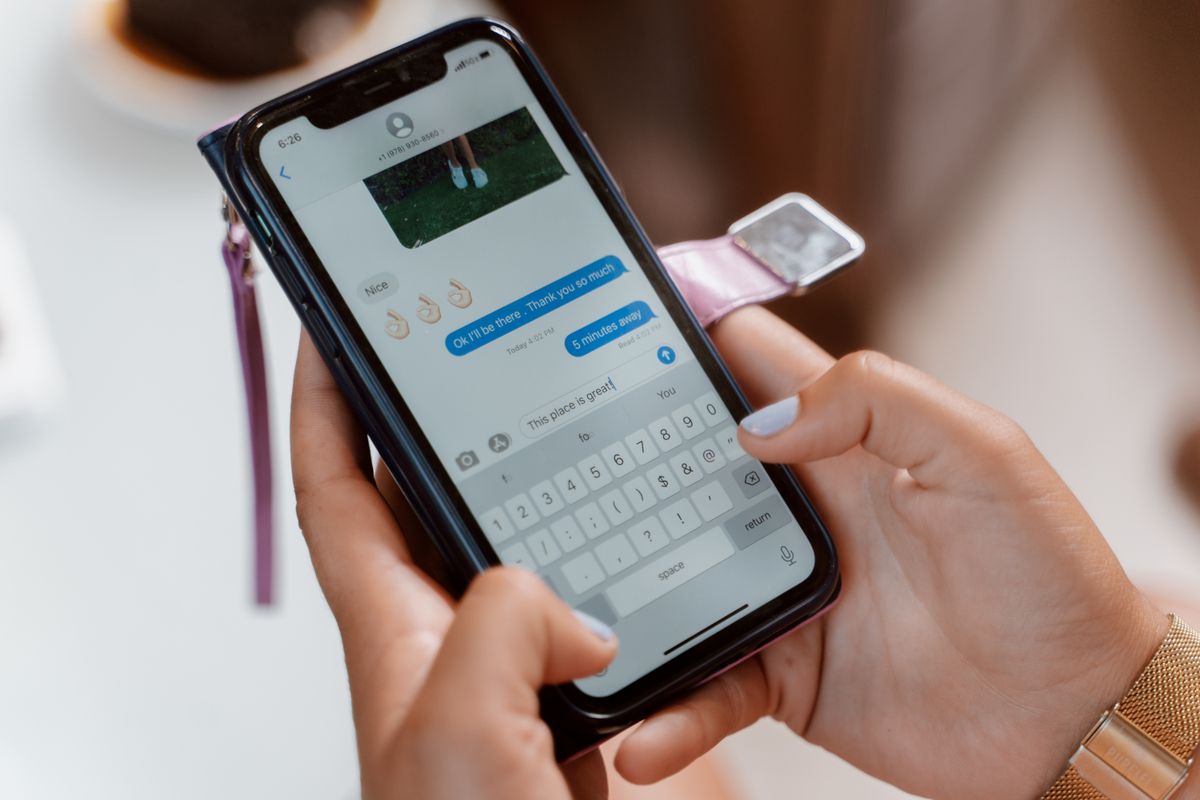
Photo: RDNE Stock project on Pexels
3. Why the deadline matters more than the rule: one in three missed callers replies
The rule matters because the text-back itself works — and the newest data puts a number on it. 99 Calls analysed 14,354 automated text-backs sent on behalf of 192 home service businesses between January and July 2026. About one in three missed callers replied, and nearly three quarters of those replies arrived within five minutes. After-hours text-backs performed about as well as daytime ones, with a 34.2% reply rate.
That speed is the whole game. The same week, fresh call data put the scale of the leak in plain terms: Invoca's 2026 benchmarks, drawn from more than 70 million calls, found only 52% of home-services callers reach a person, with the unanswered rate at 18% on weekdays and 41% on weekends. Hiya's 2026 survey found 86% of people do not answer calls from numbers they do not recognise, and 41% wait to see whether a voicemail arrives. Invoca's own platform data puts fewer than 3% of callers sent to voicemail leaving a message.
Put together, the picture is this: a quarter to a half of your callers never reach a person, almost none of them leave a voicemail, and about a third of them will answer a text sent within seconds. A text-back that fires late — or not at all, because the holiday setup was never tested — is the difference between a booked job and a caller who has already dialled the next name on the list.
Further reading: How many calls do plumbers miss? — — the answer-rate data behind the leak. How fast should you call back a missed call? — — the five-minute window, and what happens after it. Missed-call text message examples — — copy-ready texts that ask one question and name a callback time.
4. The tools that can do it — and what they cost in November 2026
A comparison published 3 November 2026, with prices checked that month, reviews the AI answering services now selling to trades. Three new names stand out:
- Spanory — self-serve AI missed-call text-back: Solo about $99 a month, Crew about $249 a month. The pitch is a text-back in about 12 seconds on every missed call, with booking and urgent-call routing. That 12-second figure matters against the 99 Calls data above: the replies that come back arrive within five minutes, so the first seconds are where the job is won.
- Calling Matrix — a managed AI receptionist, trades-only, about $297–$797 a month flat, for HVAC, plumbing, electrical and roofing shops that want done-for-you setup plus ServiceTitan, Housecall Pro or Jobber booking.
- Trillet — self-serve AI backup answering, about $49 a month for 150 minutes, then $0.20 a minute, for trades wanting cheap per-minute overage plus urgent-call SMS.
A comparison updated today, 13 November 2026, pits SkipCalls against CallBird AI. CallBird's Starter plan includes just 50 calls a month, and Spanish is only available on its Enterprise tier. SkipCalls includes bilingual support (English and Spanish), spam blocking, booking, transfers and text summaries on every plan, with no per-call fees. For a shop serving Spanish-speaking customers, that tier gate is the difference between answering the call and paying for the top plan to do it.
And a build log updated 2 November 2026 describes OnCrew, an AI receptionist built for home-service contractors, which has answered 3,685 calls on its lines since May 2026. 30% of its conversations for paying businesses came outside 8 a.m. to 6 p.m., Monday to Friday — the hours a text-back or AI receptionist is doing the work a person cannot. Since 27 October 2026 every OnCrew customer line is answered by OnCrew's own voice agent, and pricing moved to included minutes with no night, weekend or holiday surcharge. Its demo line, (213) 319-5075, answers as a sample plumbing company.
Whatever tool you pick, check three things against the 25 November rule before you switch it on: does it honour all seven opt-out words; does it let you name an exclusive opt-out method and disclose it on every message; and does it stop everything when it cannot tell whether a reply was to a marketing message or an informational one? If the answer to any of those is no, the tool is not ready for the new rule.
Further reading: Best missed-call text-back software — — the November 2026 price ladder, updated with the new entrants. Missed-call text-back cost — — what the tools actually charge, per month and per message. AI receptionist vs text-back — — when answering the call beats texting back, and when it does not.
5. The 12-day checklist
Work through this before 25 November. It takes an afternoon, and it is cheaper than a TCPA complaint.
- Classify your messages. List every automated text you send and mark each one marketing or informational. Appointment reminders, payment reminders and fraud alerts are informational; anything with an offer in it is marketing.
- Decide your opt-out method. If you want an exclusive method, pick it now — reply word, website or phone number — and write the disclosure into every message template. If you do not pick one, you must honour opt-outs by any reasonable means.
- Set the broad default. Where your tool cannot tell a marketing reply from an informational one, set it to stop everything. The narrow scoping is a choice, not a requirement.
- Check the seven words. Confirm your tool treats STOP, QUIT, END, REVOKE, OPT OUT, CANCEL and UNSUBSCRIBE as valid opt-outs, and that it honours them within 10 business days — sooner is better.
- Fix the text-back wording. Your missed-call text should say who you are, admit you are on a job, promise a specific callback time, and ask one question about the work. Never send a text that does not ask a question — a text with no question gets no reply.
- Test it before the rush. Send yourself a missed call on your holiday setup and watch what happens: does the caller get a text, does it name the reopening date, does it offer a booking or a callback time? Test once per holiday, not once per year. Brown Friday is 27 November — two days after the rule takes effect.
- Mind the carrier fees while you are in there. Registered 10DLC outbound SMS costs $0.0035 on AT&T, $0.0045 on T-Mobile and $0.005 on Verizon per segment, and the blended carrier fee is up about 30% this year. Twilio lists $0.0083 per outbound segment before carrier fees. Budget for it; it is not a vendor markup.

Photo: MART PRODUCTION on Pexels
The bottom line
The rule itself is not a crackdown — the FCC says plainly it imposes "no new compliance obligation". What changes is the precision: from 25 November, an informational opt-out can be scoped, a marketing opt-out still ends all marketing, and you may name your own opt-out method if you disclose it. The shops that will feel it are the ones whose text-back was already sloppy — the ones texting every missed call with the same generic message and no clear way out.
Twelve days is enough to fix that. Classify the messages, pick the method, set the broad default, and test the text-back before Brown Friday. The data says a third of the callers you miss will answer a text sent within seconds. Make sure the text they get is legal, fast, and asks them one question.
Sources
Further reading from the sources cited in this post:
- TechStackRx — TCPA Consent Revocation Rule: Nov. 25 Opt-Outs
- Courier — TCPA SMS Opt-Out Rules: What Changes on November 25, 2026
- Bigly Sales — Revocation of Consent Under the TCPA: 7 FCC Changes to Know
- Plura AI — TCPA Opt Out Examples: 8 Scenarios for AI Agents
- Neat Circle — Missed-Call Text-Back, Explained
- Hicira — Missed Call Statistics 2026: 160+ Stats, Sources Linked
- Novaboro — Best AI Answering Service for Trades (Honest 2026 Comparison)
- SkipCalls — CallBird AI Alternative (2026)
- OnCrew — How I Built an AI Phone Agent That Answers Calls for Contractors at 2 AM
This post is general information, not legal advice. Check the details with a telecoms lawyer for your situation.
Frequently asked questions
Does the FCC's 25 November rule ban missed-call text-backs?
No. The rule changes how opt-outs work, not whether you can text a missed caller. A text-back to someone who called your business is an informational message in most cases, and an opt-out of an informational message can now be scoped to that category.
What are the seven opt-out words?
STOP, QUIT, END, REVOKE, OPT OUT, CANCEL and UNSUBSCRIBE. A reply with any of them is a valid opt-out, unless you have designated a different exclusive method and disclosed it clearly on every message.
How fast do I have to honour an opt-out?
Within a reasonable time, no more than 10 business days from receipt. The FCC is consulting on cutting it to seven business days, with comments due 25 November 2026 — that proposal is not law yet.
Does an opt-out of one text stop all my texts now?
It depends on the message. An opt-out of an informational text can be scoped to that category from 25 November. An opt-out of a message with any marketing in it still ends all your marketing texts. If you cannot tell which it was, stop everything.
Is a text-back worth it if only a third of callers reply?
Yes. Fewer than 3% of callers sent to voicemail leave a message, and only about half of home-services callers reach a person at all. A text-back that fires in seconds recovers callers who would otherwise dial the next business on the list.
Stop losing calls to voicemail
RingBack Text replies to every missed call in about a minute, with your business name and a booking link. Try it free — you get 3 free text-backs, and plans start at $49 a month (Growth $79, Pro $129).